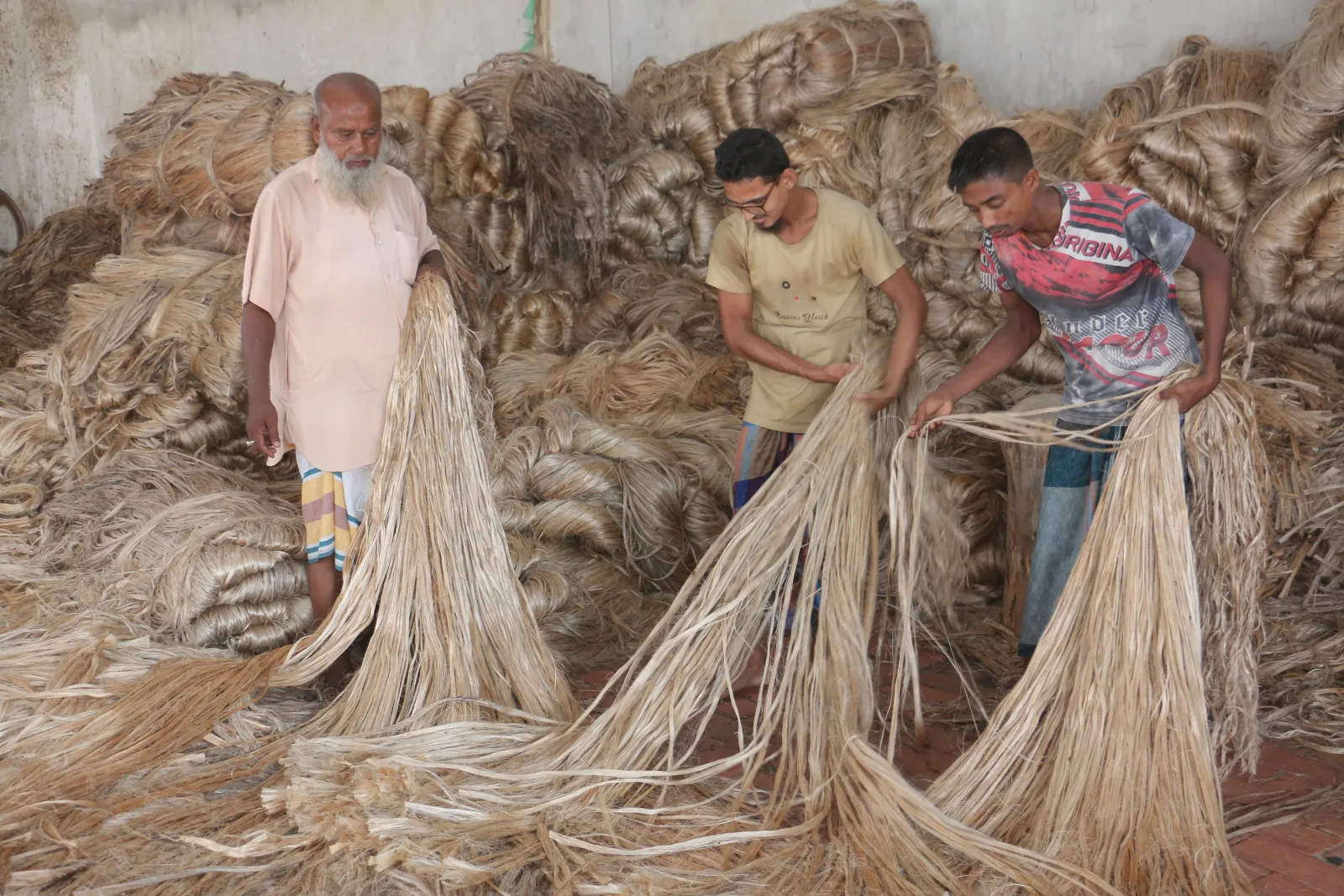
Why Jute Is the Future of Sustainable Materials
As the world moves away from single-use plastics, jute offers a natural, renewable alternative that performs — across packaging, agriculture, interiors and industry. Every metre of jute we ship replaces something synthetic.
Four Reasons Jute Is Good for the Earth
Biodegradable
Unlike synthetic fibers such as polypropylene and polyester, jute breaks down naturally in soil within months, leaving behind no microplastics or toxic residues.
Renewable
Jute is a fast-growing annual crop that reaches harvest maturity in just 4–6 months. It requires minimal irrigation and no synthetic pesticides, making it one of the most efficient crops on Earth.
Carbon Negative
A hectare of jute plants absorbs roughly 15 tonnes of CO₂ per growing season — more than most forest trees. Jute cultivation actively contributes to carbon sequestration.
Soil Enriching
Jute leaves shed during cultivation naturally fertilise the soil, reducing the need for chemical fertilisers and improving soil health for subsequent crops.
Our Commitment to Responsible Manufacturing
At Wahab Jute Mills, sustainability is not a marketing statement — it is embedded in what we do. We manufacture a natural product, using natural processes, with the minimum environmental impact possible.
We believe in fair wages for our workers, safe and healthy working conditions, responsible use of resources, and building a business that contributes positively to the communities of Khulna and Bangladesh.
Ready to Source the Best Jute Yarn from Bangladesh?
Whether you need one container or one hundred, tell us your requirements and we’ll send competitive factory-direct pricing within 24 hours. No obligation.
Ship Bari, Khulna, Bangladesh