Ask a jute mill whether their quality is good and the answer is always yes. Ask them how they test it, and the answer tells you everything. For an importer, the gap between a supplier who inspects on gut feel and one who tests to a defined method is the gap between predictable, on-spec deliveries and a lottery you re-enter with every shipment. This guide explains how jute yarn and fibre are actually tested — the specific properties that matter, the method behind each one, the standards you will see referenced on a report, and exactly what to ask a supplier so you can tell a real quality system from a reassuring sentence.
Jute quality is not one number. It is a small set of measurable properties — count, strength, moisture, twist, evenness and cleanliness — each tested by a defined method on a representative sample. A supplier who can show you results against those properties, lot by lot, is one you can plan production around.
What 'quality' means once you make it measurable
'Premium' and 'export quality' are marketing words until they are attached to numbers. In practice the quality of a jute yarn is the sum of a handful of properties, each of which can be measured and each of which maps to a real consequence on your floor: the yarn's linear density (count), its twist, its breaking strength, its moisture content, its evenness, and how clean it is. Get these right and the yarn runs; get them wrong and you pay in downtime, waste and seconds. If you are still fixing supplier terminology, our guides to jute yarn types, grades and quality and common yarn faults pair naturally with this one.
The core jute yarn tests, and what each tells you
| Test | Property measured | Method / instrument | Why it matters to you |
|---|---|---|---|
| Yarn count | Linear density (lb/spyndle or tex) | Wrap reel + balance; calculated | Wrong count = wrong GSM, cover and cost per metre |
| Twist | Turns per unit length | Twist tester (untwist method) | Too little = weak, hairy; too much = stiff, harsh |
| Breaking strength | Tensile force at break | Single-strand / lea strength tester | Low strength = warp breaks and loom stops |
| Moisture regain | Water held vs oven-dry weight | Oven-dry method / moisture meter | You pay for water; excess invites mildew |
| Evenness | Mass variation & imperfections | Evenness tester / visual board | Unevenness = bars, thick/thin places in cloth |
| Batching oil | Residual oil content | Solvent extraction | Too much stains and fails dye/finish; too little = brittle |
Yarn count (linear density)
Count is the single most important spec on the order, because everything downstream is built on it. Jute is traditionally expressed in pounds per spyndle (one spyndle is 14,400 yards) and increasingly in tex (grams per kilometre). A mill measures it by winding a known length on a wrap reel and weighing it. If the delivered count drifts from what you ordered, your fabric GSM, cover and cost per metre all drift with it. If count and its many units are what trip you up, our jute yarn count conversion guide is the reference to keep open.
Twist
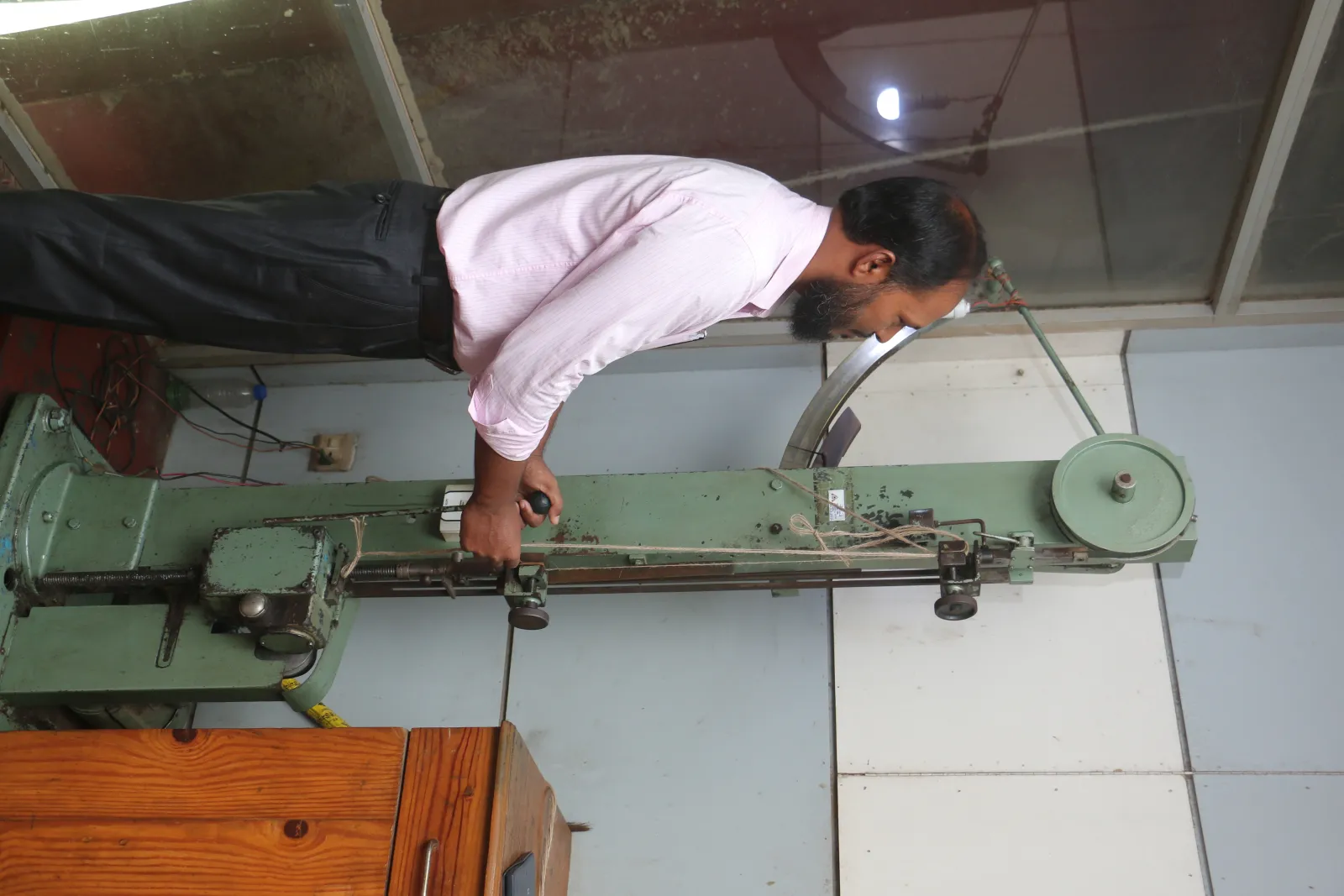
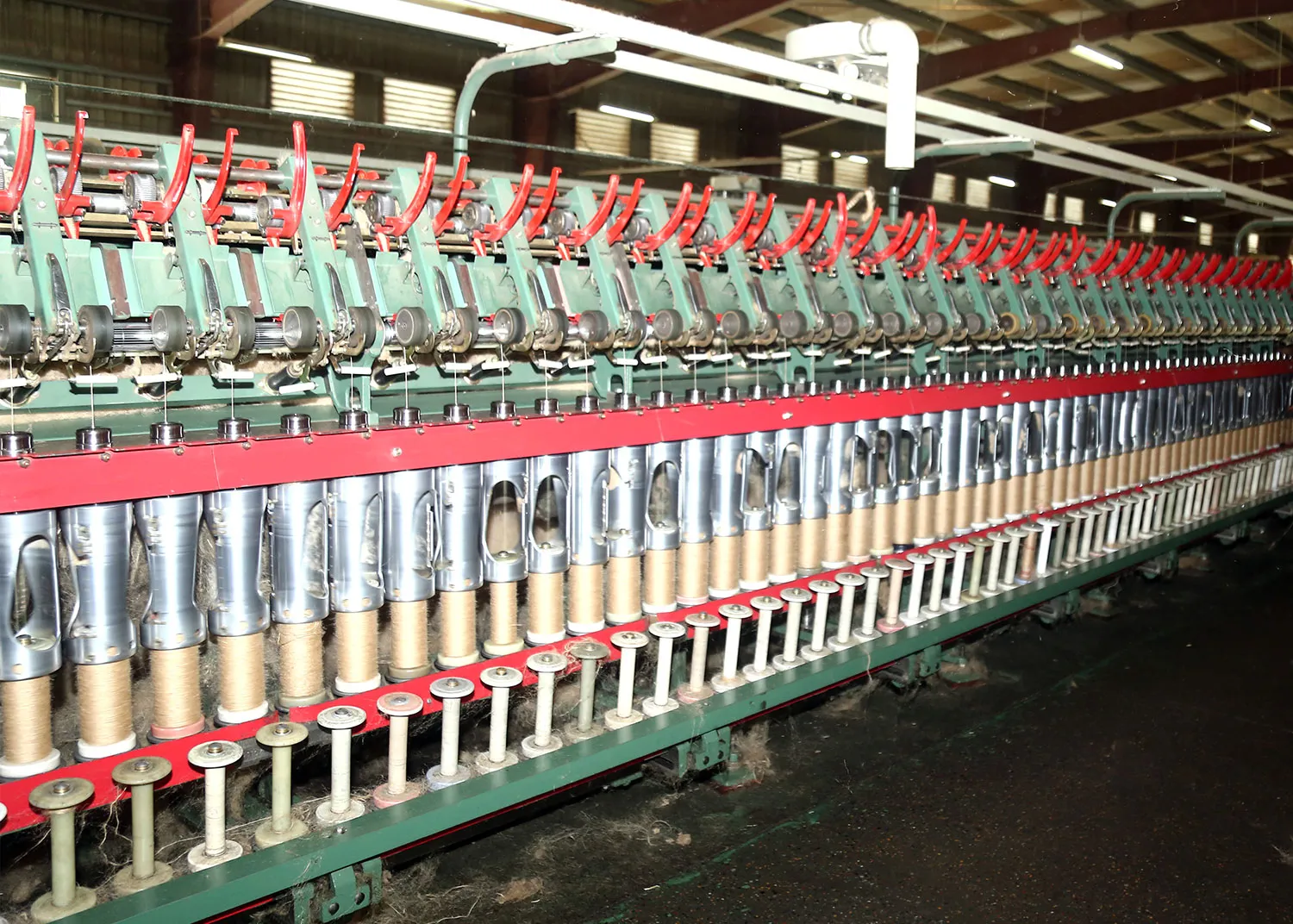
Twist is what holds the fibres together and gives the yarn its strength; it is measured in turns per unit length on a twist tester that untwists a specimen until the fibres are parallel. Too little twist and the yarn is weak and hairy and sheds on the machine; too much and it becomes stiff, harsh and prone to snarling. Consistent twist along the length is as important as the average — twist variation shows up as streaky, uneven fabric.
Breaking strength
Strength is tested by pulling a specimen to destruction and recording the force at break, either as single-strand strength or as the strength of a bundle (a lea). It is the property most directly felt on your loom: yarn that snaps below its expected load becomes a warp break, a stop, and a piecing — and every piecing is a potential fabric defect. Strength is inherited mostly from the fibre grade and set by the twist, which is why a good mill controls both rather than one.
Moisture regain
Jute is hygroscopic — it holds water — so weight without a moisture figure is meaningless. Regain is the mass of water a sample holds expressed as a percentage of its bone-dry weight, measured by oven-drying a weighed sample and reweighing it. The commercial standard regain for jute is around 13.75%. This matters twice: you are paying by weight, so over-wet yarn is water you bought at yarn prices; and yarn shipped too wet in a sealed container is yarn that arrives with mildew, odour and staining.
Evenness and imperfections
Evenness is the variation in mass along the yarn, assessed on an evenness tester or, more simply, by winding yarn onto a black board and counting imperfections against a standard. Thick places, thin places, slubs and neps are all counted here. An uneven yarn weaves into cloth with visible bars and weak points even when its average count and strength look fine on paper — which is exactly why average figures alone never tell the whole story.
Batching oil content
Jute fibre is softened before spinning with an emulsion of oil and water; the residual oil is measured by solvent extraction. Get it wrong in either direction and it costs you: too much oil stains the yarn and can cause it to fail dyeing and finishing, while too little leaves the fibre brittle and hard to process. It is a small test that quietly prevents a whole class of rejections.
Fibre testing: quality is mostly decided before spinning
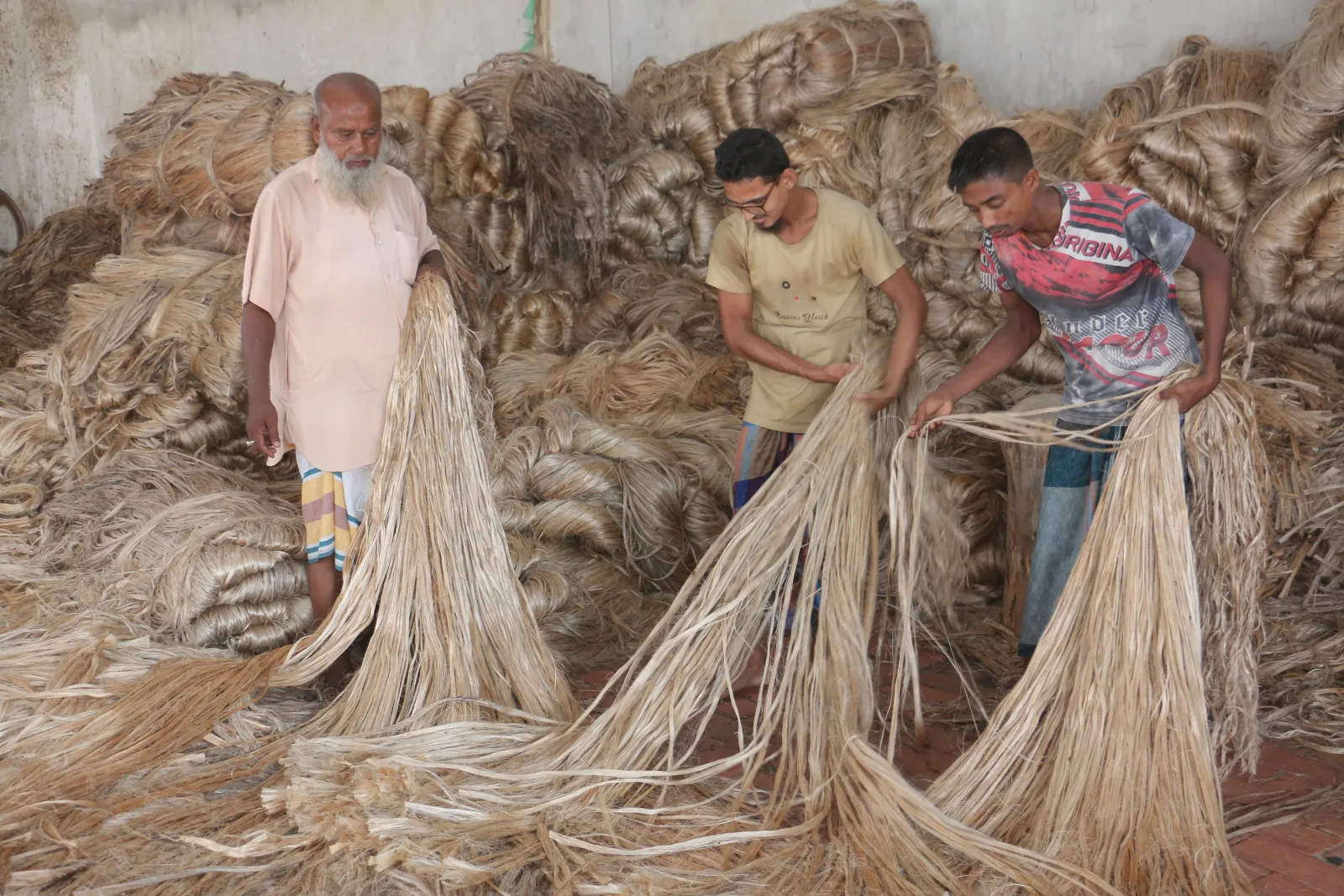
No amount of careful spinning rescues poor fibre, so the most consequential testing happens before the fibre is yarn at all. When jute arrives at the mill it is graded and checked for the properties that will define everything made from it:
- Grade — assigned against the Bangladesh standard grades for White (W) and Tossa (TD) jute, judging strength, colour, lustre, defects, root content and length together.
- Fibre strength — tested on a bundle strength tester and reported in grams per tex; the ceiling for how strong the finished yarn can be.
- Defects and cleanliness — specks, bark, knots, hard-centre and root content, which become visible contamination and weak points in the cloth.
- Colour and lustre — the natural golden colour and sheen that buyers pay a premium for and that dictate how the fibre bleaches and dyes.
- Moisture — over-wet bales lose grade, gain weight you pay for, and risk heating and mildew in storage.
This is a large part of why fibre origin matters so much; we cover the fibre side in depth in why Bangladesh grows the best jute.
Sampling: you test the batch, not the box
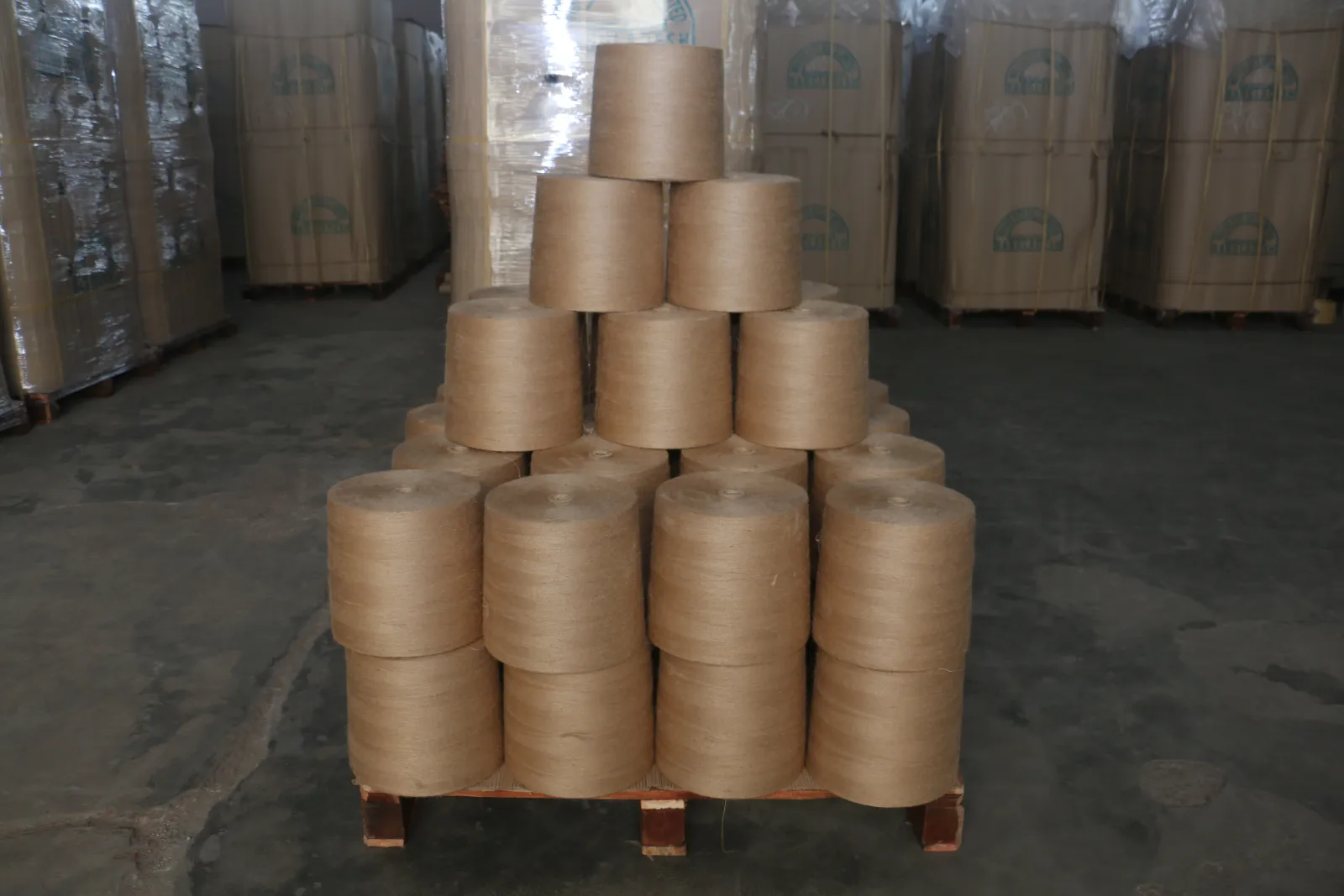
A test result is only as trustworthy as the sample behind it. Testing one convenient cone tells you about one cone; it says nothing about the lot. A credible mill draws samples across the batch — different spindles, frames and shifts — so the reported figures represent what you will actually receive, not the best spool on the floor. When you read a test report, the sampling basis (how many samples, drawn from where) is as important as the numbers themselves.
Standards and terms you will see on a report
- Count units — lb/spyndle (14,400 yд) and tex (g/km); both describe linear density, and a good report states which it uses.
- Lea — a fixed length used for strength testing; 'lea strength' is the breaking strength of that bundle.
- Regain vs moisture content — regain is water as a percentage of dry weight; moisture content is water as a percentage of total weight. They are not the same number, so check which is quoted.
- Grades — White (W1–W5) and Tossa (TD1–TD8 range) grades under the Bangladesh fibre standard, referenced by agencies such as the BSTI and research by the BJRI.
- Quality ratio / quality index — composite figures some mills quote to combine strength and fineness into one number; useful shorthand, but ask what goes into it.
How to read a mill test report
- Check it names the lot or shipment — a report not tied to your specific batch is decoration.
- Confirm the sampling basis — how many samples, drawn from across the batch, not a single spool.
- Read count and twist against your order, not just against 'normal' — small drifts compound downstream.
- Look at strength and evenness together — a strong but uneven yarn still weaves badly.
- Check moisture is stated as regain or content, and that it is within the commercial norm.
- Note the method or standard referenced for each figure; 'passed inspection' with no method is not a test.
What to ask your supplier for
You do not need your own laboratory to hold a supplier to a standard — you need to ask for the right evidence and keep asking for it on every order:
- A pre-shipment test report for each lot, covering count, twist, strength, moisture and evenness.
- The method or standard used for each figure, and the sampling basis behind it.
- Retained reference samples, so a dispute can be checked against what was actually shipped.
- The option of independent third-party inspection (SGS, Bureau Veritas, Intertek) at your cost for critical orders.
- Consistency across orders — one good report is easy; a run of them is a quality system.
If you are still shortlisting suppliers, this checklist folds directly into the wider one in how to evaluate a jute manufacturer in Bangladesh.
A supplier who tests to a method and shows you the results is not being generous — they are being accountable. That accountability is the product you are actually buying.
— Wahab Jute Mills
How we handle it
At Wahab Jute Mills we test fibre on intake and yarn through production, and we issue quality documentation with shipments on request. You can read the specifics of our process in how we ensure consistent quality across every shipment, or simply request a quote and ask us to include a sample test report — the fastest way to see how a supplier tests is to ask them to prove it.